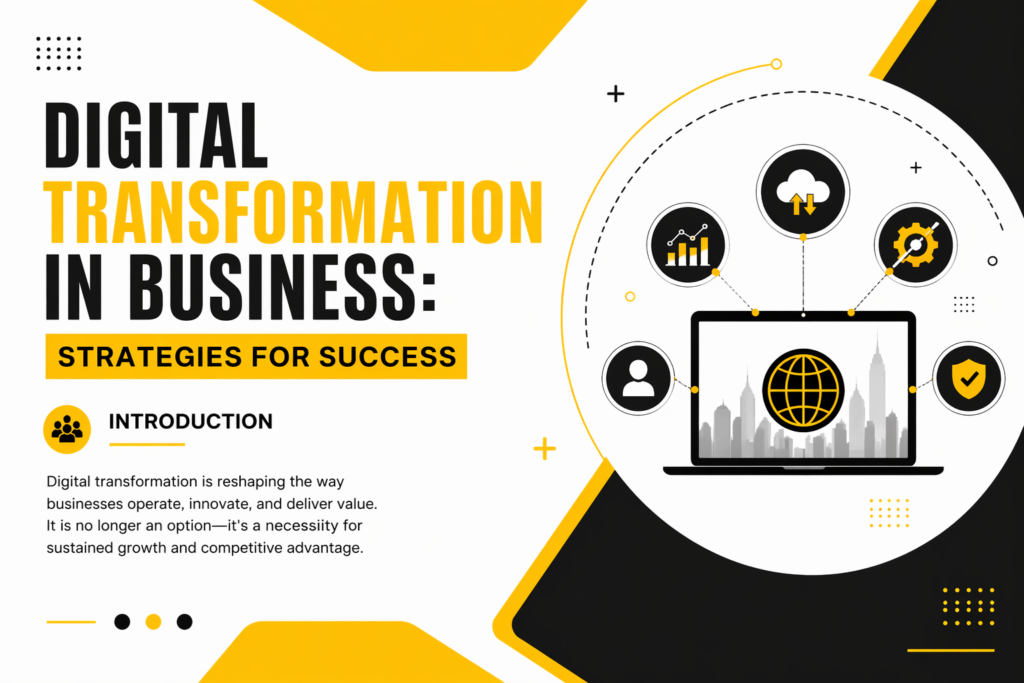
Digital Transformation in Business: Strategies for Success Introduction
waqas waqas
April 23, 2026

In today’s fast-paced world, digital transformation is no longer optional—it’s essential. Businesses of all sizes are adopting new technologies to stay competitive, improve efficiency, and deliver better customer experiences. From small startups to global enterprises, embracing digital change can unlock growth and long-term success.
This guide explores what digital transformation really means and the most effective strategies businesses can use to succeed.
Socialize Your Business Using Social Media Marketing
What is Digital Transformation in Business?
Digital transformation refers to the integration of digital technologies into all areas of a business. It fundamentally changes how companies operate and deliver value to customers.
This includes adopting tools like cloud computing, artificial intelligence, data analytics, and automation to improve processes and decision-making.
Why Digital Transformation Matters
Businesses that fail to adapt risk falling behind their competitors. Here’s why digital transformation is critical:
- Improved Efficiency: Automation reduces manual work and errors
- Better Customer Experience: Personalized and faster services
- Data-Driven Decisions: Real-time insights for smarter strategies
- Increased Agility: Quickly adapt to market changes
- Higher Profitability: Streamlined operations reduce costs
Key Strategies for Successful Digital Transformation
1. Develop a Clear Digital Strategy
Before adopting new technologies, businesses must define their goals. A clear roadmap ensures that digital efforts align with overall business objectives.
Tip: Focus on solving specific problems rather than adopting technology for the sake of trends.
Invest in the Right Technology
Choosing the right tools is crucial. Popular technologies include:
- Cloud computing for scalability
- Artificial intelligence for automation
- Customer Relationship Management (CRM) systems
- Data analytics platforms
The key is to select solutions that fit your business needs and budget.
Focus on Customer Experience
Digital transformation should always enhance the customer journey. Businesses must understand customer needs and use technology to provide seamless and personalized experiences.
Build a Digital-First Culture
Technology alone isn’t enough—people play a major role. Employees must be trained and encouraged to embrace digital tools.
Action Step: Offer regular training and promote innovation within teams.
Use Data for Decision-Making
Data is one of the most valuable assets in modern business. Companies should collect, analyze, and use data to improve strategies and predict trends. Ensure Strong Cybersecurity
As businesses go digital, security becomes more important. Protecting customer data and business systems should be a top priority.
Start Small and Scale Gradually
Instead of transforming everything at once, begin with small projects. Test, learn, and scale successful initiatives over time.
Common Challenges in Digital Transformation
While the benefits are clear, businesses may face challenges such as:
- Resistance to change from employees
- High initial investment costs
- Lack of technical expertise
- Integration issues with existing systems
Overcoming these challenges requires strong leadership and a long-term vision.
Future of Digital Transformation
The future of business will be driven by advanced technologies like AI, machine learning, and automation. Companies that embrace digital transformation today will be better prepared for tomorrow’s challenges.
Digital transformation is a powerful tool for business growth and innovation. By adopting the right strategies—such as investing in technology, focusing on customers, and building a digital culture—companies can achieve long-term success.
The key is to stay adaptable, keep learning, and continuously evolve with changing technologies.
waqas
Common Challenges in Digital Transformation
While the benefits are clear, businesses may face challenges such as:
- Resistance to change from employees
- High initial investment costs
- Lack of technical expertise
- Integration issues with existing systems
Overcoming these challenges requires strong leadership and a long-term vision.
Future of Digital Transformation
The future of business will be driven by advanced technologies like AI, machine learning, and automation. Companies that embrace digital transformation today will be better prepared for tomorrow’s challenges.