Freelancing Ka Complete Guide for Students
Top Cybersecurity Solutions for Global Industries 2025 | Best Cybersecurity Solutions for Banks & Education
Aqsa aqsa
October 25, 2025
Business & Technology
Aqsa aqsa
October 25, 2025
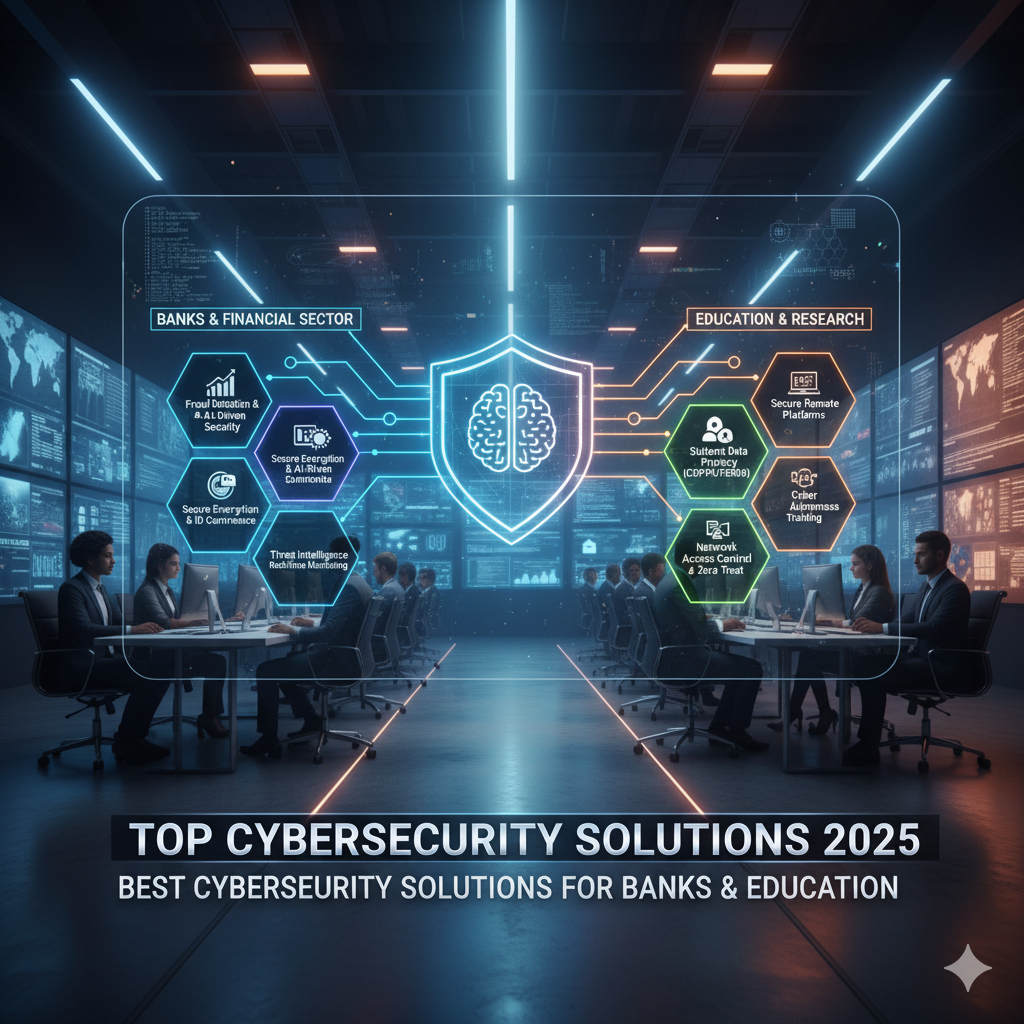
Cybersecurity is now a board-level priority, not an IT checklist item. The rise of AI-powered attacks, ransomware-as-a-service, supply chain compromises, deepfake fraud, and cloud breaches have pushed enterprises in every sector — banking, education, manufacturing, biotech, healthcare, energy, and government — to redesign their defense stack in 2025. This article provides a global-view analysis of top cybersecurity solutions used across industries, with a clear focus on high-risk sectors like banks and educational institutions.
The security posture of enterprises is shifting from prevention-only to assume-breach, detect early, and respond fast. Three forces drive this shift:
Attack automation & AI-enabled exploits
Hybrid work and cloud-first infrastructure
Regulatory pressure & compliance risk (PCI-DSS, ISO27001, FERPA, SOC2, GDPR)
Boards want cybersecurity ROI. CISOs want measurable resilience. Buyers want solutions that reduce breach window, not just generate dashboards.
Below are the mainstream solution pillars being adopted in 2025:
Prevent lateral movement after compromise — used widely in banks, healthcare & OT.
Unified prevention, detection, and response from endpoint to cloud.
Used by automotive, manufacturing, energy and logistics sectors.
Mandatory for SaaS-first and multi-cloud organizations.
Reduces insider and account-takeover events.
Outsourced Tier-1 to Tier-3 detection & incident response.
Prevent financial, academic, and genetic data leakage.
Moves security from reactive to proactive defense.
Banks face the highest cyber compliance and adversarial interest. Attackers target SWIFT rails, wire transfers, treasury workflows, and high-value financial data.
Zero Trust Micro-Segmentation (Illumio, Akamai, Zscaler)
Fraud & Transactional Behavior Analytics
MDR/XDR for 24×7 breach containment (CrowdStrike, Palo Alto Cortex)
Secure Access & Privilege Management (CyberArk, BeyondTrust)
Cloud Security for FinTech APIs & Core Banking
Data Loss Prevention (DLP) at rest and in motion
Minutes of downtime = regulatory fines + trust erosion + capital loss.
How can we help grow your business today?
Education is now the easiest enterprise target — broad attack surface, unmanaged BYOD, unsecured labs, public networks, and PII-heavy databases.
Secure WLAN & Branch Networks (Symantec, Sophos, Fortinet)
Cloud Identity Security for LMS/ERP & Google/Microsoft EDU
Endpoint Protection for Student & Faculty Devices
Ransomware Resilience + Immutable Backups
Content Filtering & Safe Internet Policies
MDR for institutions without in-house SOC
One ransomware hit can freeze admissions, payroll, transcripts, and long-term reputation.
Procurement decisions are no longer feature-based — they are risk outcome-based.
Time-to-contain (not time-to-detect)
Regulatory alignment (sector-specific compliance)
Integration depth, not logo count
Managed support availability
Cost predictability over 36–48 months
Vendor execution maturity, not marketing claims
CISO, CIO, CFO, IT Risk, Compliance, Legal, Procurement, sometimes Board Cyber Oversight.
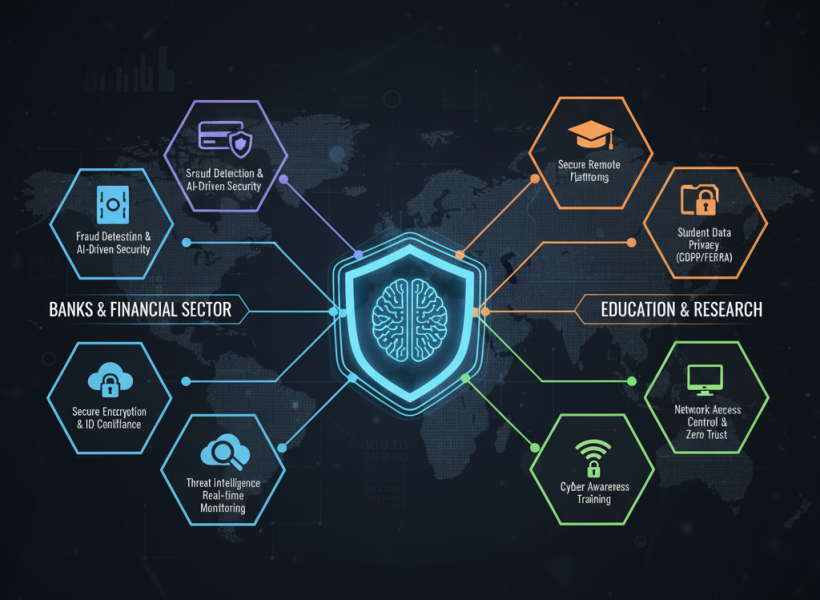
Zero Trust / Micro-Segmentation: Zscaler, Illumio, Akamai, Palo Alto
MDR/XDR Platforms: CrowdStrike, Microsoft, SentinelOne, Trellix, Sophos
Branch & WLAN Security: Symantec, Fortinet, Sophos, Aruba
OT/Industrial Cybersecurity: Cato Networks, Dragos, Claroty
Identity / PAM: CyberArk, Okta, PingIdentity, BeyondTrust
Cloud & CNAPP: Wiz, Prisma Cloud, Lacework, Orca
2025 security winners will not be those with the widest tool stack — but those with integrated, outcome-measured, managed solutions aligned to business risk.
Whether you are a global bank defending transactional rails or a university protecting student identity data, the path forward is not “more tools” — it is fewer, integrated, measurable solutions backed by managed response.
Invest where risk is largest, not where vendors are loudest.
Cybersecurity in 2025 is no longer a defensive IT expense — it is a strategic risk-control function that protects revenue, reputation, compliance, and operational continuity. As attacks evolve faster than legacy controls, global enterprises are moving toward outcome-based, integrated, and managed security stacks — especially in high-exposure sectors like banking and education.
The winners will not be organizations that deploy the most tools, but those that invest intentionally in the right solutions mapped to real business risk, with the governance, visibility, and response maturity to reduce breach impact — not just detect it.
In an environment where a single breach can erase years of trust and millions in capital, cybersecurity is now a board mandate, a customer expectation, and a competitive advantage.